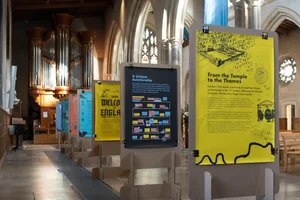
TISHA B’AV AND ENGLAND’S FORGOTTEN EXILE
Every day, thousands of people walk through the Barbican without realising that beneath their feet lies one of the most significant forgotten places in English history.
Hidden beneath gardens, buildings and streets is the cemetery of England’s first Jewish community. Established soon after the Norman Conquest, it served London’s Jews for more than two centuries. For around its first hundred years, it was also the only place in England where Jews were permitted to bury their dead. Families travelled from across the kingdom to lay their loved ones to rest there, making it not simply London’s Jewish cemetery but the burial place of medieval Anglo-Jewry.
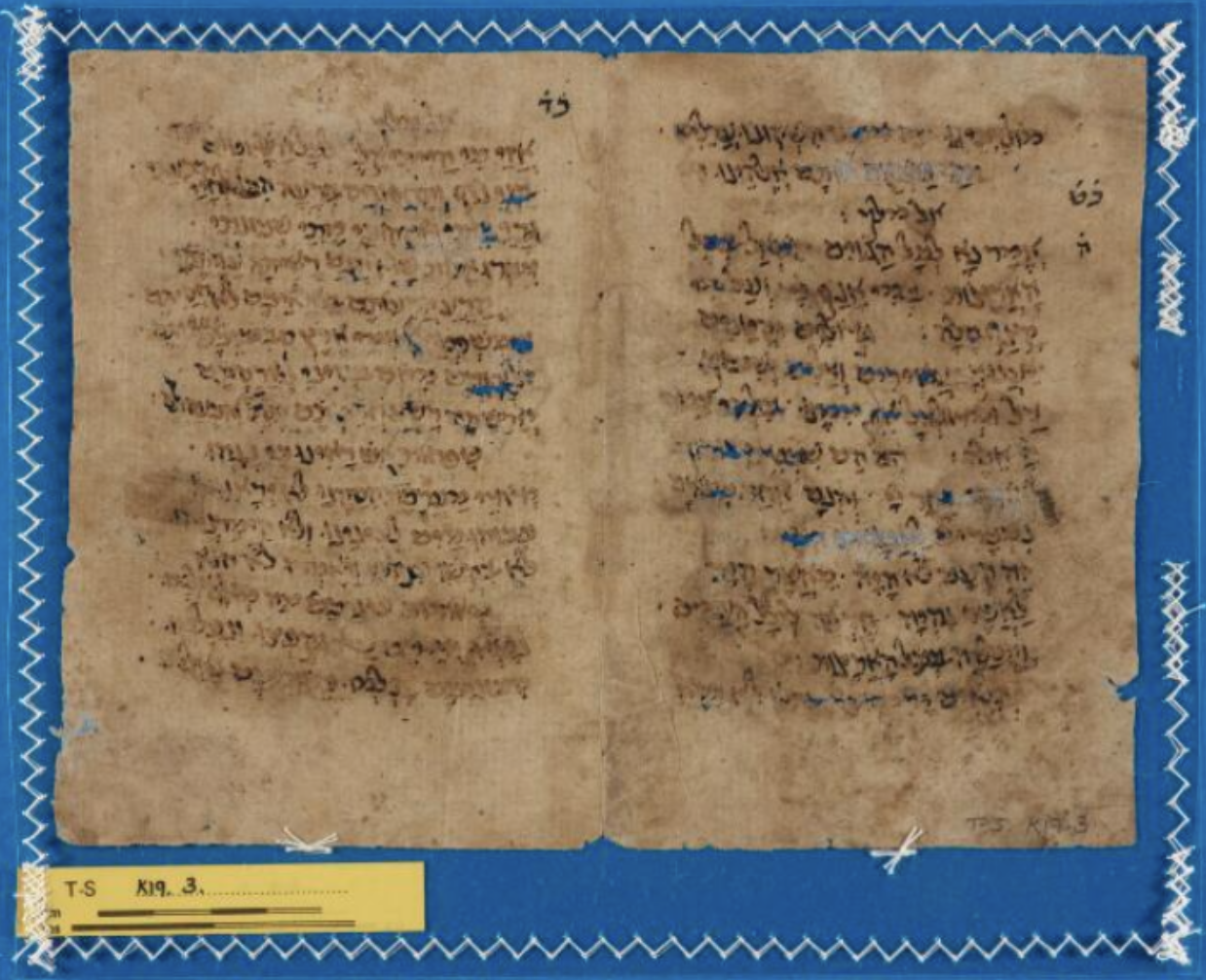
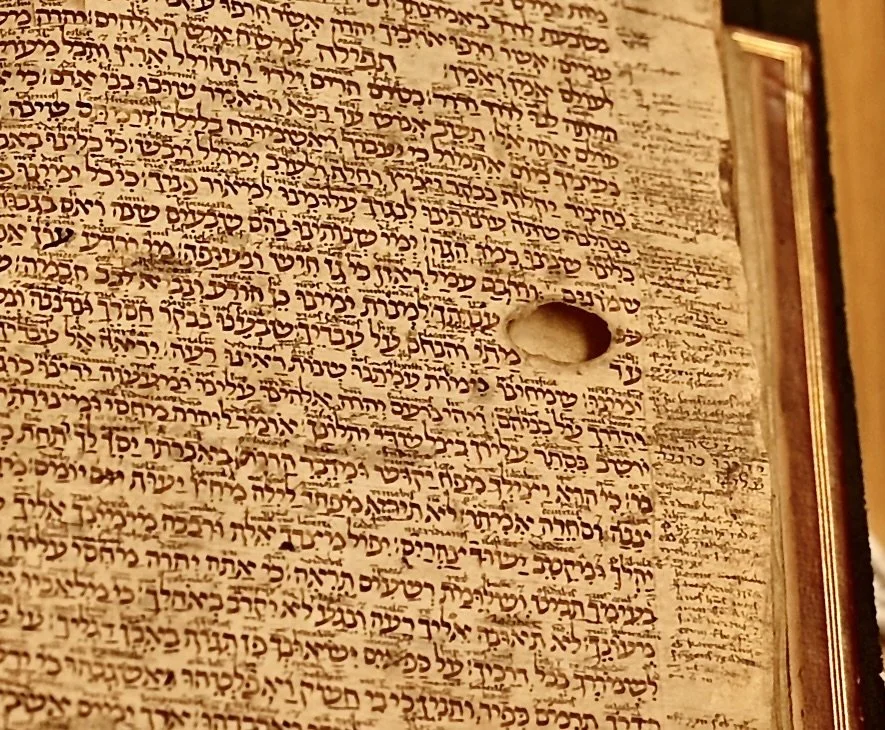
‘There is no one besides You to bring help’. Extracts from the Tisha B'Av Seliḥot 11th -12th Century. Cambridge University Library, "Ktiv" Project, The National Library of Israel.
Today, little marks its presence. Yet beneath the modern City lies the quiet witness to a remarkable community that flourished, contributed to English life and then, almost overnight, disappeared.
That disappearance reached its climax in the summer of 1290.
On 18 July that year, King Edward I’s Edict of Expulsion was promulgated. Every Jew in England was ordered to leave the kingdom by All Saints’ Day. Within a matter of months, families had to sell what they could, abandon their homes, leave behind the graves of those they loved and set out for an uncertain future across the Channel.
For England’s Jews, the date carried a terrible significance. The Edict was promulgated on Tisha B’Av, the Ninth Day of the Hebrew month of Av. The date must have been chosen deliberately. No medieval Jew would have failed to understand its meaning.
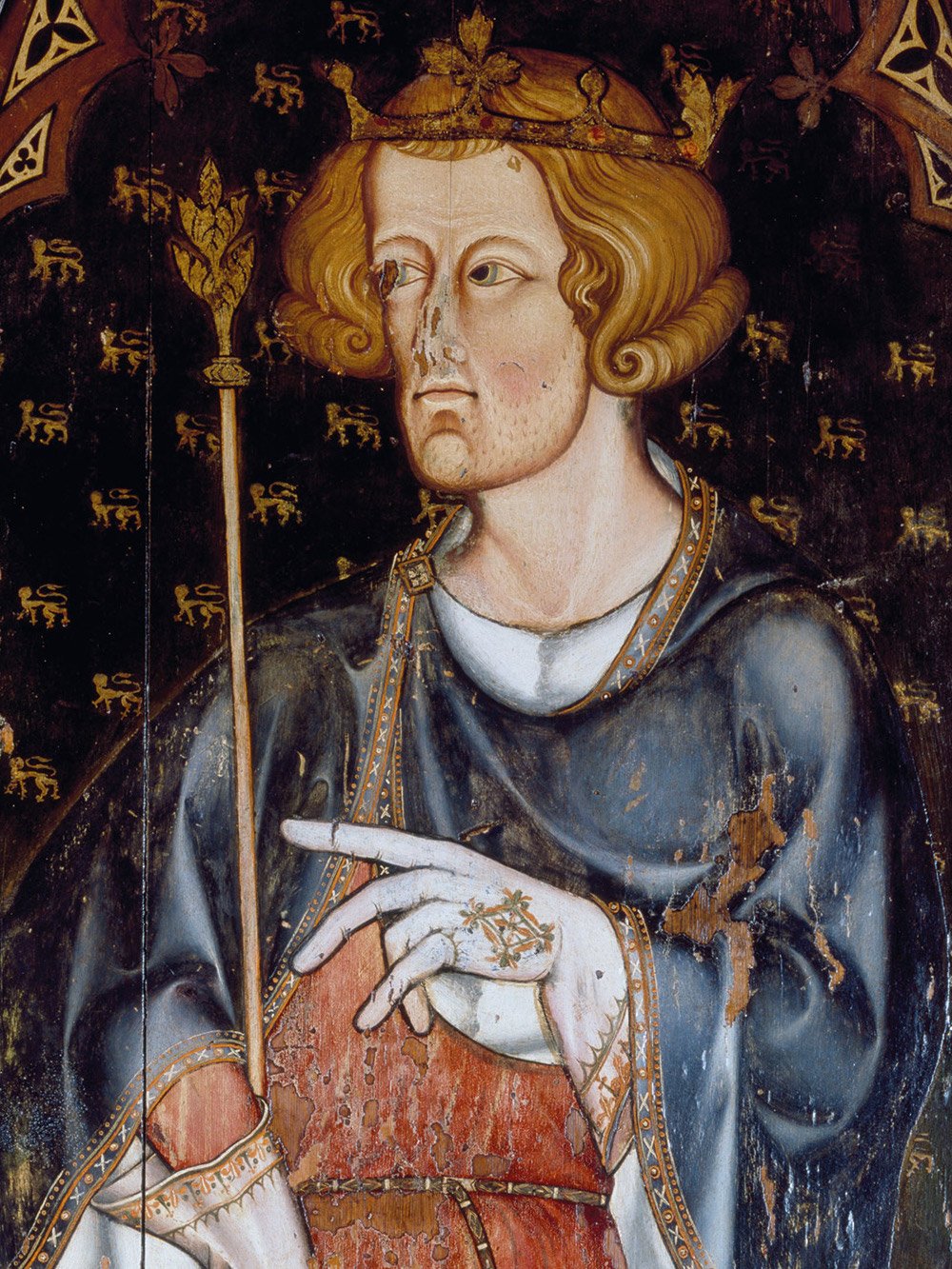
Edward 1, installed in Westminster Abbey, medieval portrait of the monarch thought to be installed during his reign
Tisha B’Av commemorates the destruction of both the First and Second Temples in Jerusalem, in 586 BCE and 70 CE respectively. Across nearly two thousand years of Jewish memory, it has become the day on which Jews recall not only those catastrophic events but the repeated experience of exile, loss and displacement that followed them. It is a day when history and memory meet.
For England’s Jews, the coincidence must have been devastating. Nearly twelve centuries after the destruction of the Second Temple, another settled Jewish community found itself facing exile. Once again, people who believed they belonged were being told they no longer did.
The Jews whom Edward expelled were not newcomers. They had been part of English life since the years following the Norman Conquest. They settled in London, York, Lincoln, Norwich, Oxford, Winchester and many other towns, living in Jewish quarters close to markets and centres of trade. These were not ghettos in the later continental sense. Jews and Christians lived alongside one another, traded together, appeared before the same courts and, for the most part, enjoyed the ordinary relationships of neighbours. As in any medieval society, tensions and disputes existed, but coexistence was far more common than conflict.
Nor were England’s Jews defined by a single occupation. They were merchants, physicians, scholars, craftsmen, dyers of cloth, curers of leather and traders. Some became involved in lending money, an activity practised by Christians as well despite ecclesiastical restrictions, and by the thirteenth century the Crown and great noble families increasingly relied on Italian merchant bankers and other international financiers. Yet because Jewish financial affairs were closely regulated by the Crown and meticulously recorded, they became unusually visible, helping to create a misleading impression that has echoed through history. Like every other community, England’s Jews earned their living in many different ways.
Over time, however, their position became increasingly precarious.
As direct subjects of the Crown, Jews enjoyed royal protection, but that protection came at a price. Heavy taxation, political expediency and changing economic conditions left the community increasingly vulnerable. At the same time, poisonous myths began to circulate.
The blood libel, first recorded in Norwich in 1144, falsely accused Jews of murdering Christian children for religious purposes. It was a fiction, but one with terrible consequences although at the time this dreadful slander got minimal traction among the Jews’ neighbours but it persisted. Such accusations sought to inflame popular prejudice and reinforced the idea that Jews were somehow separate from the society of which they had long formed a part. Jews were being “othered”.
The massacre of the Jewish community at York in 1190 remains one of the darkest episodes in medieval English history. Many committed suicide rather than accept forced conversion and those who surrendered to conversion were murdered anyway. It demonstrated how quickly neighbourliness could give way to violence when political instability, religious hostility and rumour combined.
During the thirteenth century, restrictions steadily increased. Jews were required to wear identifying badges. The Statute of the Jewry of 1275 removed one important means by which many Jewish families supported themselves without creating realistic alternatives. Economic hardship followed for many, although experiences varied widely from place to place.
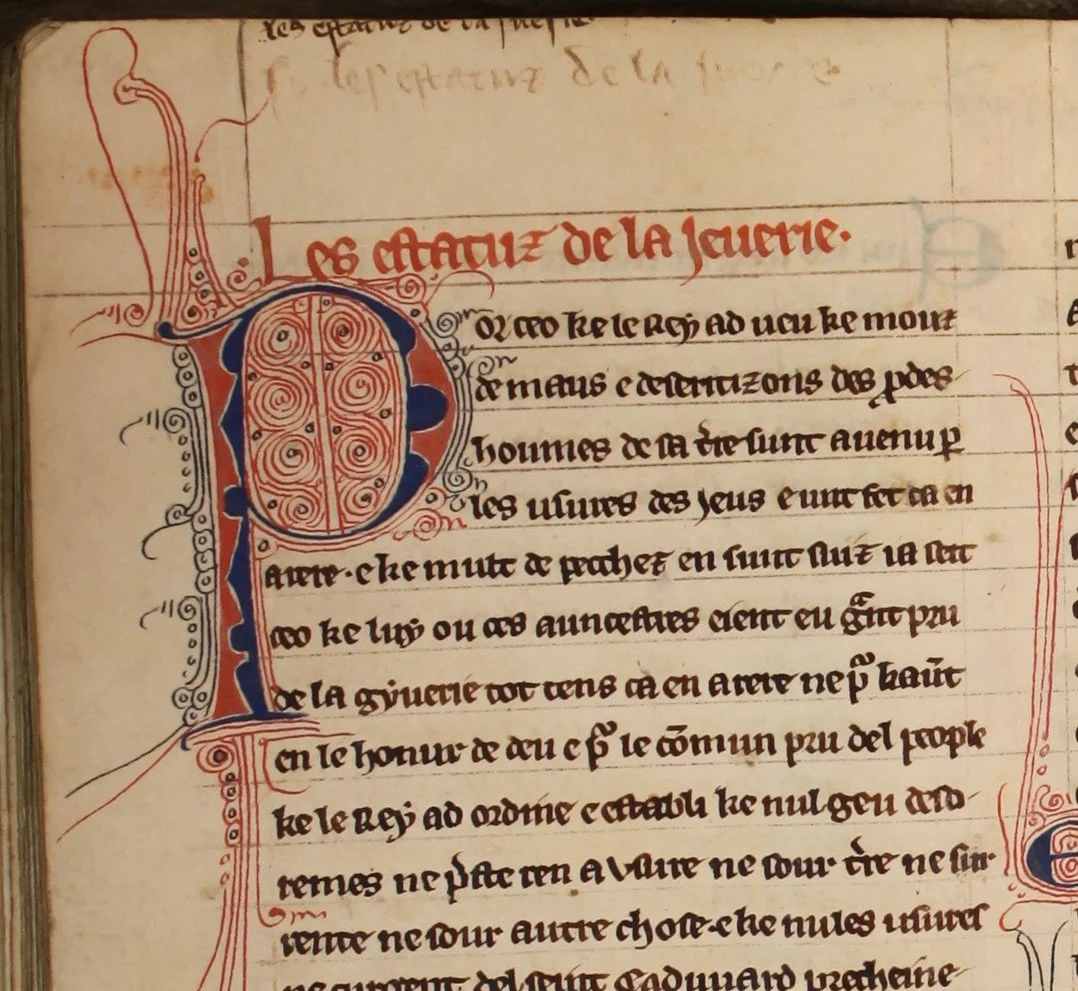
Extract of the Statute of Jewry, c. 1275, National Archive https://www.nationalarchives.gov.uk/education/resources/jews-in-england-1290/source-one-statute-of-jewry-extract-a/
The notorious prosecutions for alleged coin-clipping in 1278 and 1279 further devastated the community. Hundreds were arrested and, according to contemporary sources, well over two hundred were executed. Historians generally regard both the scale of the prosecutions and the severity of the punishments as grossly disproportionate. Confidence that the Crown would continue to protect its Jewish subjects was profoundly shaken.
By 1290, expulsion had become conceivable in a way that it had never been before.
Yet knowing that danger is growing is very different from believing that it will end in exile.
England had been home to Jewish families for more than two centuries. Children had been born there whose parents and grandparents had also been born there. Businesses had been built, friendships formed and communities established. Above all, generations had buried their dead in English soil.
When the order came to leave, families could gather together precious books, treasured possessions and whatever wealth remained to them.
They could not take the graves of those they loved.
The practical consequences of the Edict were devastating. Every Jew was required to leave England by All Saints’ Day, 1 November 1290. Those who remained faced death and the loss of everything they possessed. Homes had to be sold in haste, businesses abandoned and possessions reduced to whatever could be carried. Lives patiently built over generations were dismantled in a matter of weeks.
Behind the formal language of the royal decree lay thousands of individual stories that history has only glimpsed.
There were parents trying to reassure frightened children while concealing their own uncertainty. Elderly people, who had expected to end their days in familiar surroundings, found themselves facing an exhausting journey into exile. Families made impossible decisions about what to take and what to leave behind. Sacred books, which carried not only religious meaning but family history and learning, would have been among their greatest treasures. Much else had simply to be abandoned.
The massacre of the Jewish community at York in 1190 remains one of the darkest episodes in medieval
By 1290, expulsion had become conceivable in a way that it had never been before.
Yet knowing that danger is growing is very different from believing that it will end in exile.
England had been home to Jewish families for more than two centuries. Children had been born there
Most travelled towards ports on England’s south and east coasts before crossing to Normandy, Flanders and northern France, where Jewish communities already existed. Yet exile offered no guarantee of security. France itself would expel its Jews on several occasions during the centuries that followed. Those leaving England were not travelling towards certainty, only towards an unknown future.

The Destruction of the Temple of Jerusalem by Francesco Hayez, 1867 CC BY SA 4.0
One contemporary account offers a poignant glimpse of the vulnerability of those final days.
Walter of Guisborough tells the story of a group of Jews who had boarded a ship in the Thames Estuary. According to his chronicle, the captain persuaded them to walk across a sandbank while the tide was out, claiming it would help refloat the vessel. Once they had disembarked, he sailed away, leaving them stranded as the tide returned.
Like many medieval chronicles, the account cannot be verified in every detail, and historians treat it with appropriate caution. Yet whether entirely factual or shaped by later retelling, it conveys a deeper truth. Once expelled, England’s Jews had lost not only their homes but also the protection of the law. They had become strangers, dependent upon the goodwill—or the dishonesty—of others.
Walter also records that Edward ordered the captain’s arrest when he learnt what had happened. If true, it reminds us that even in an age capable of expelling an entire community, there remained a distinction between enforcing an unjust policy and committing an act of murder. The Expulsion itself was a profound injustice. The alleged betrayal on the sandbank was something darker still.
And then, almost as suddenly as they had appeared in English history, the Jews disappeared from it.
For almost three hundred and seventy years there was no openly practising Jewish community in England. Synagogues fell silent because there were none. Jewish festivals disappeared from public life. Hebrew ceased to be heard in worship. A community that had lived in England since the Norman Conquest had vanished.
Yet absence is not the same as erasure.
The Jews who left England carried with them memories, traditions and, where they could, books. Some manuscripts produced or used by England’s medieval Jewish community survive today in libraries across Europe, bearing quiet witness to lives that official history almost forgot.
There are also remarkable reminders that medieval England was not simply a place of division. Among the most extraordinary survivals is the Trilingual Dictionary and Psalter, whose story is told elsewhere on this website. It stands as powerful evidence of scholarly engagement across faiths and cultures, reminding us that curiosity, learning and mutual respect persisted even as prejudice was becoming more deeply rooted.
13th Century Trilingual Hebrew Psalter Manuscript (Add MS 89788) British Library
That complexity matters.
The history of England’s medieval Jews is too often reduced either to persecution or to finance. Neither tells the whole story.

For more than two centuries, Jews were part of the everyday life of English towns and cities. They shared streets with their Christian neighbours, traded in the same markets, appeared before the same courts and contributed to the economic, intellectual and civic life of the kingdom. Most relationships were unremarkable because most neighbours simply got on with the business of living alongside one another.
That is precisely what makes the Expulsion so significant.
England did not simply remove a small religious minority.
It lost neighbours.
It lost families whose lives had become woven into the fabric of the kingdom. It lost scholars, merchants, physicians, craftsmen, mothers, fathers and children. It lost a community that, despite periods of discrimination and violence, had become part of England itself.
The greatest suffering was borne, of course, by those forced into exile.
But England diminished itself as well.
For the next three and a half centuries, the country developed without an openly Jewish community in its midst. That absence left an imprint not only on Jewish history but on English history. Something that had once formed part of the nation’s life had been removed, leaving a gap that few recognised and fewer still remembered.
That is why the cemetery beneath today’s Barbican matters so much.
It is not simply an archaeological site or an historical curiosity. It is one of the few places where medieval Anglo-Jewry still has a physical presence in the modern City. Beneath today’s gardens, walkways and buildings lie generations of men, women and children whose lives helped shape medieval London.
They were not passing visitors. They belonged here.
For around its first century, this was the only Jewish cemetery in England. The dead were brought to London from Jewish communities across the kingdom, making it a place of national, not merely local, significance. Long before England possessed a network of Jewish cemeteries, this ground served families from throughout the country. It became the resting place of England’s earliest Jewish community.
When the Expulsion came, many families must have known that they were saying farewell not only to their homes but also to those buried there. In Jewish tradition, visiting the graves of loved ones is an enduring act of remembrance. Exile meant that countless families would never again stand beside the graves of their parents, spouses or children.
That knowledge must have been among the deepest sorrows of all.
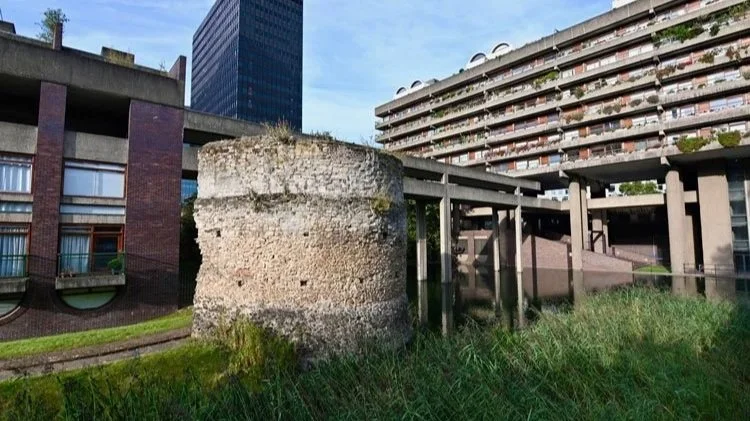
Barbican Estate, City of London
Today, few Londoners realise what lies beneath their feet. Yet the cemetery quietly reminds us that England’s Jewish story did not begin with Oliver Cromwell’s tacit acceptance permitting readmission of Jews in the seventeenth century. By then, England had already experienced more than two centuries of Jewish life, followed by almost three and a half centuries without an openly practising Jewish community.
The story had not begun again.
It had been interrupted. History had left a Jewish-shaped space in England’s national story; our task is simply to make it visible again.
That distinction matters.
Too often, the medieval Jewish community appears in English history only as a brief episode ending in expulsion. Too many histories of Kings and Queens, politics and wars ignore the antipathy rulers and nobles harboured towards an innocent people. Yet for more than two hundred years the English Jewish community formed part of the life of this country. Its members worshipped, worked, argued, traded, studied, celebrated births and marriages, mourned their dead and built lives every bit as real as those of their Christian neighbours.
When they were expelled, England did not simply lose a minority.
It lost part of itself.
The work of the Jewish Square Mile Foundation grows directly from that understanding.
Our purpose is not simply to commemorate a forgotten cemetery, important though that is. It is to restore a forgotten community to the history of the City of London and, in doing so, to enrich our understanding of England itself.
Through research, education, exhibitions, guided walks, public events, artistic commissions and partnerships across communities and faiths, we seek to make visible a chapter of history that has remained hidden in plain sight for more than seven centuries.
This is not about rewriting history.
It is about completing it.
The Foundation believes that the history of medieval London’s Jews is not solely Jewish history. It is London’s history. It is England’s history. Recovering it benefits everyone because it gives us a fuller, richer and more truthful understanding of the country we have inherited.
There is another reason why this work feels especially important today.
Across Europe, antisemitism has once again become more visible. Ancient prejudices have found new forms of expression, often wearing contemporary language but drawing upon myths that are centuries old. Remembering the events of 1290 cannot by itself prevent hatred in our own time. But history teaches us the danger of allowing prejudice, fear or political convenience to strip one group of its place within society.
The lesson of the Expulsion is therefore larger than Jewish history alone.
It asks what happens to a nation when it excludes part of itself.
When England expelled its Jews in 1290, it did more than exile a people.
It deprived itself of neighbours.
For centuries afterwards, England lived with the absence of a community that had helped shape its early history. That absence left more than empty houses or silent streets. It left a silence in the nation’s memory.
The purpose of remembrance is not to preserve victimhood. It is to restore humanity. It is to recover the lives of people who can too easily disappear behind the language of edicts and chronicles. It is to remember that those expelled were not merely “the Jews”. They were families. They were Londoners. They were English Jews.
Perhaps that is the deepest meaning of Tisha B’Av.
It is a day that teaches not only grief but responsibility. It reminds us that what is destroyed through prejudice impoverishes us all, and that memory is one of the ways in which justice begins.
The Jewish Square Mile Foundation cannot undo the injustice of 1290.
But it can help ensure that those who were expelled are no longer forgotten.
The task is not simply to remember them.
It is to restore them to the story of England.
Because without them, the story itself is incomplete.
Header image: MS T-S K 19.3 The Friedberg Genizah Project (FGP): 10239101