BEFORE THE EXPULSION: THE MANUSCRIPT THAT DEFIED DIVISION
When we think about Jewish life in medieval England, the story often ends with 1290.
King Edward I’s Edict of Expulsion brought more than two centuries of Jewish life to an abrupt conclusion. Yet to understand what England lost, we must first understand what existed. Among the most remarkable witnesses to that lost world is a manuscript that speaks not of conflict, but of collaboration.
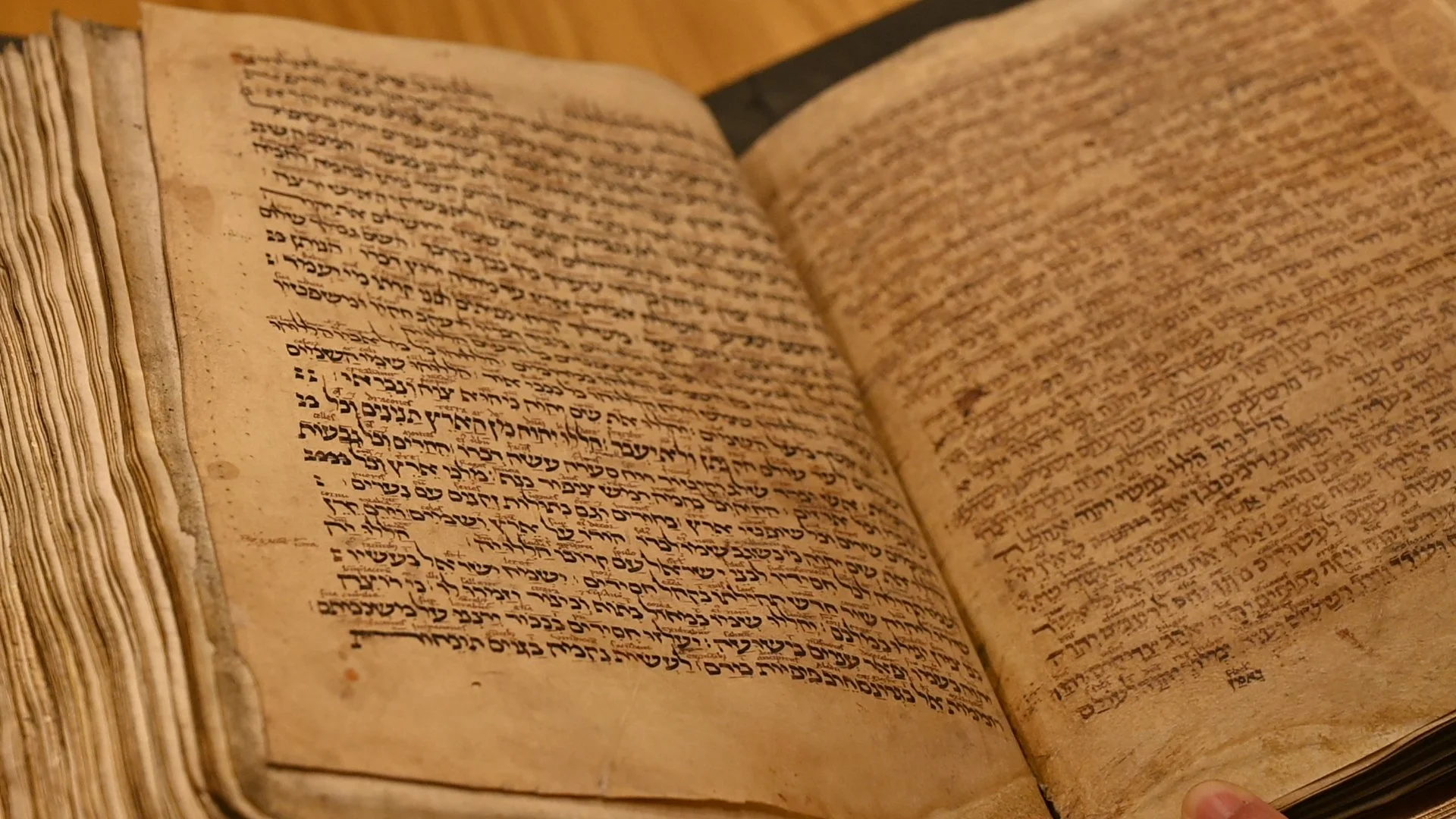
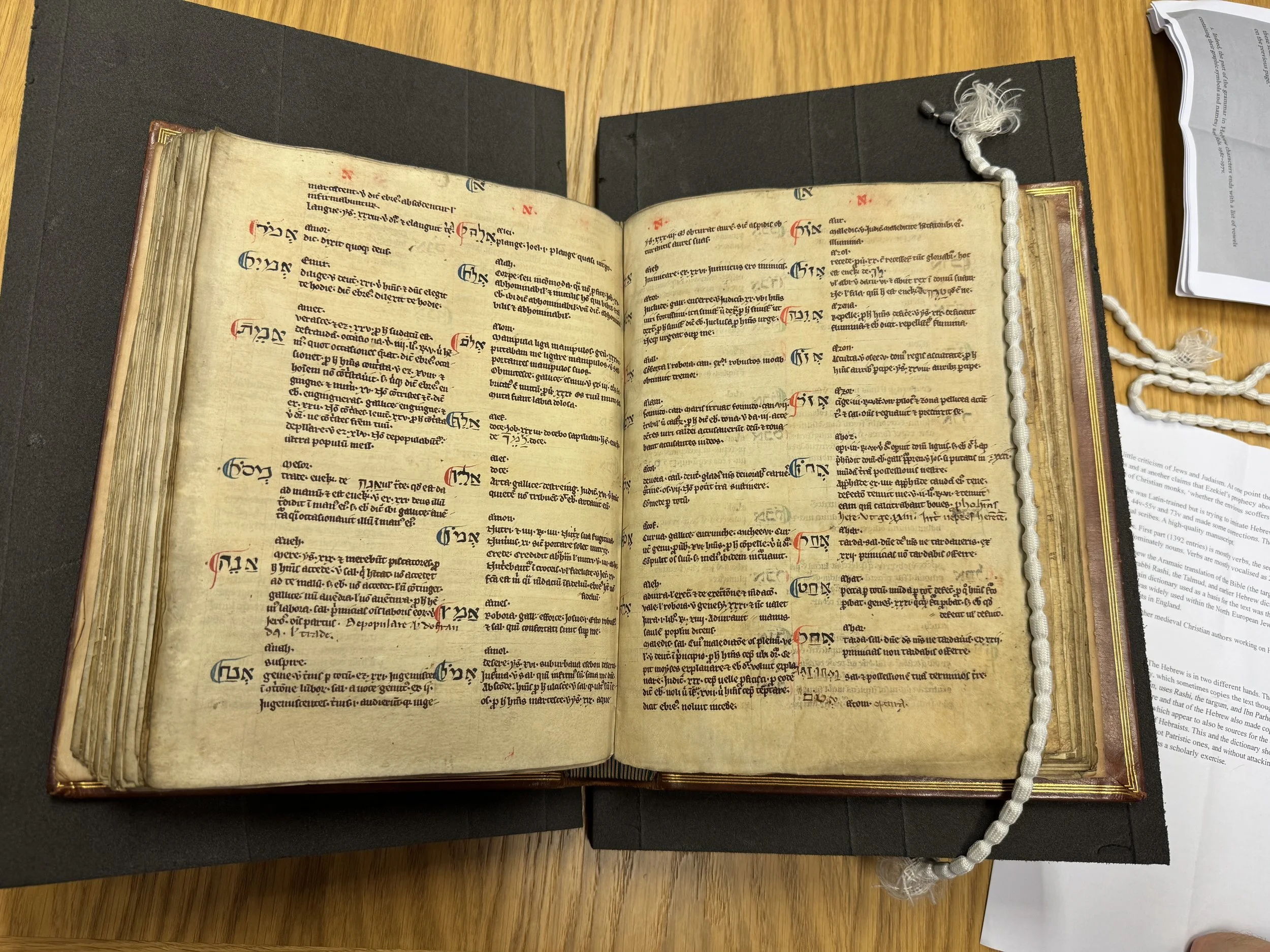
13th-Century Trilingual Hebrew Psalter Manuscript (Add MS 89788) British Library
Now preserved in the British Library this extraordinary volume was compiled at Ramsey Abbey in the middle of the thirteenth century. It combines a unique Hebrew–Latin–Anglo-Norman dictionary, a Hebrew Psalter and a Hebrew grammar. Together they form one of the most important surviving records of intellectual exchange between Jews and Christians in medieval England.
What makes this manuscript exceptional is not simply its content but the way it came into being.
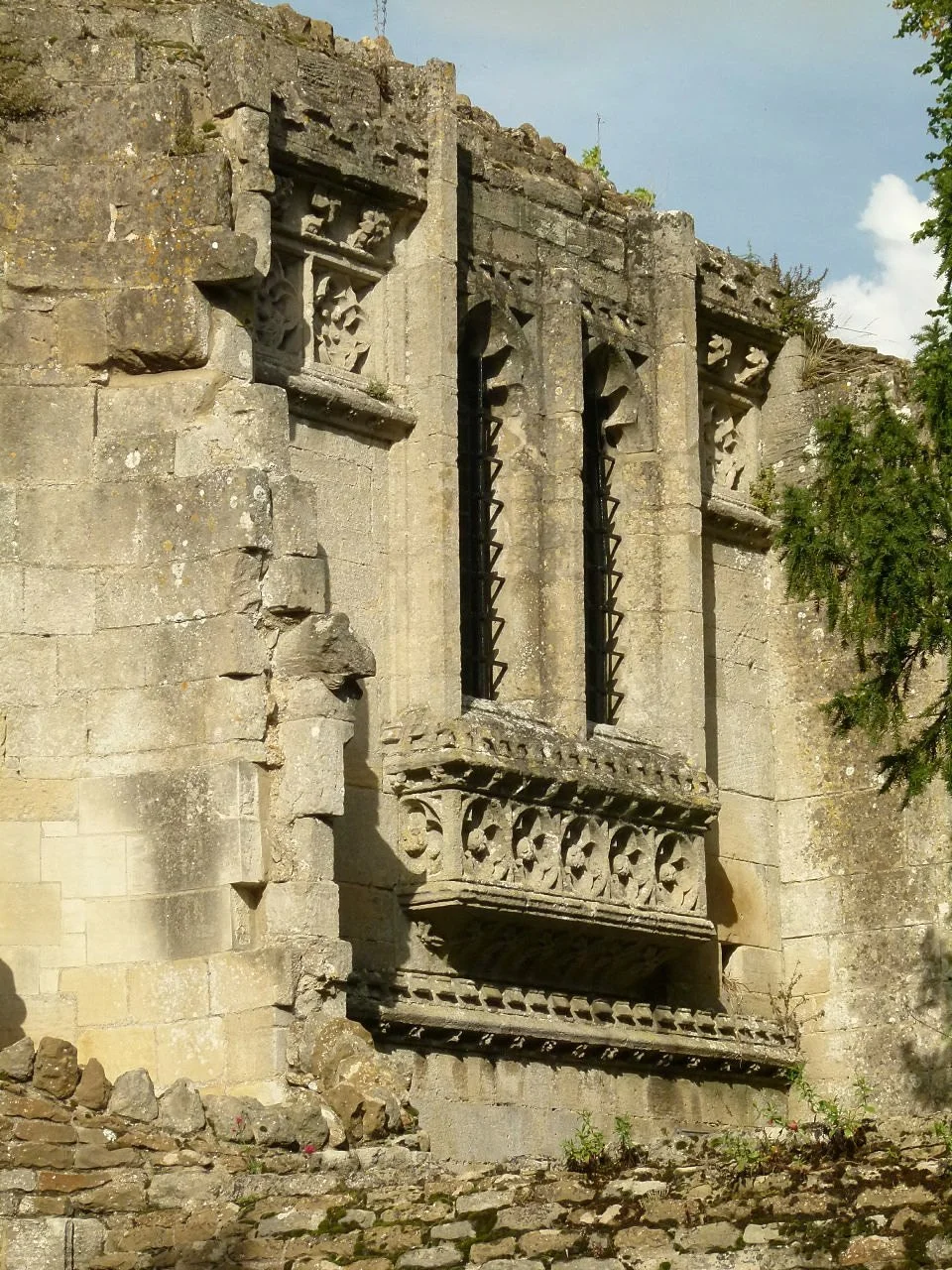
The remains of the gatehouse of Ramsey Abbey, Huntington, Cambridgeshire CC BY SA 2.0
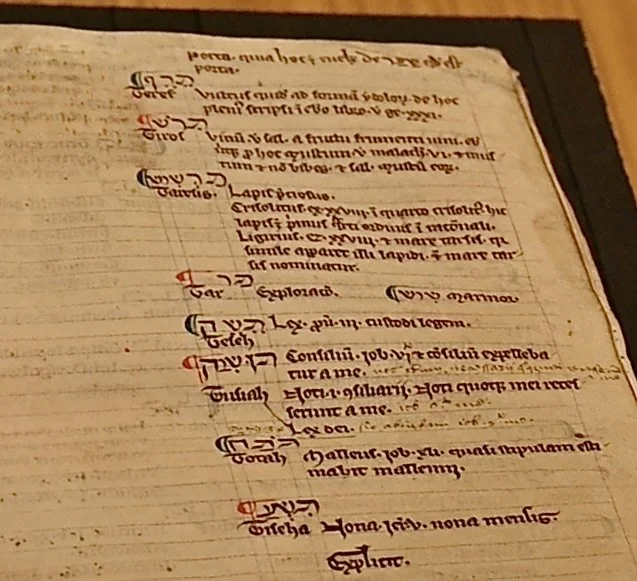
The dictionary contains more than 3,600 Hebrew words. Each is written in Hebrew characters, accompanied by a phonetic transliteration into Latin letters, a Latin translation and, in many cases, an Anglo-Norman French equivalent. Four entries even include Middle English. It remains the only known dictionary of its kind. Many pages have notes written in the margins, guides to pronunciation written by people who really wanted to understand the Hebrew language, the original biblical language.
A work of this scale was not produced in a matter of weeks or months. It would almost certainly have taken years. Nor could it have been compiled from books alone. Someone had to explain pronunciation, grammar, shades of meaning and idiom. Every page suggests conversations across the table: questions asked, pronunciations corrected, meanings debated and knowledge shared.
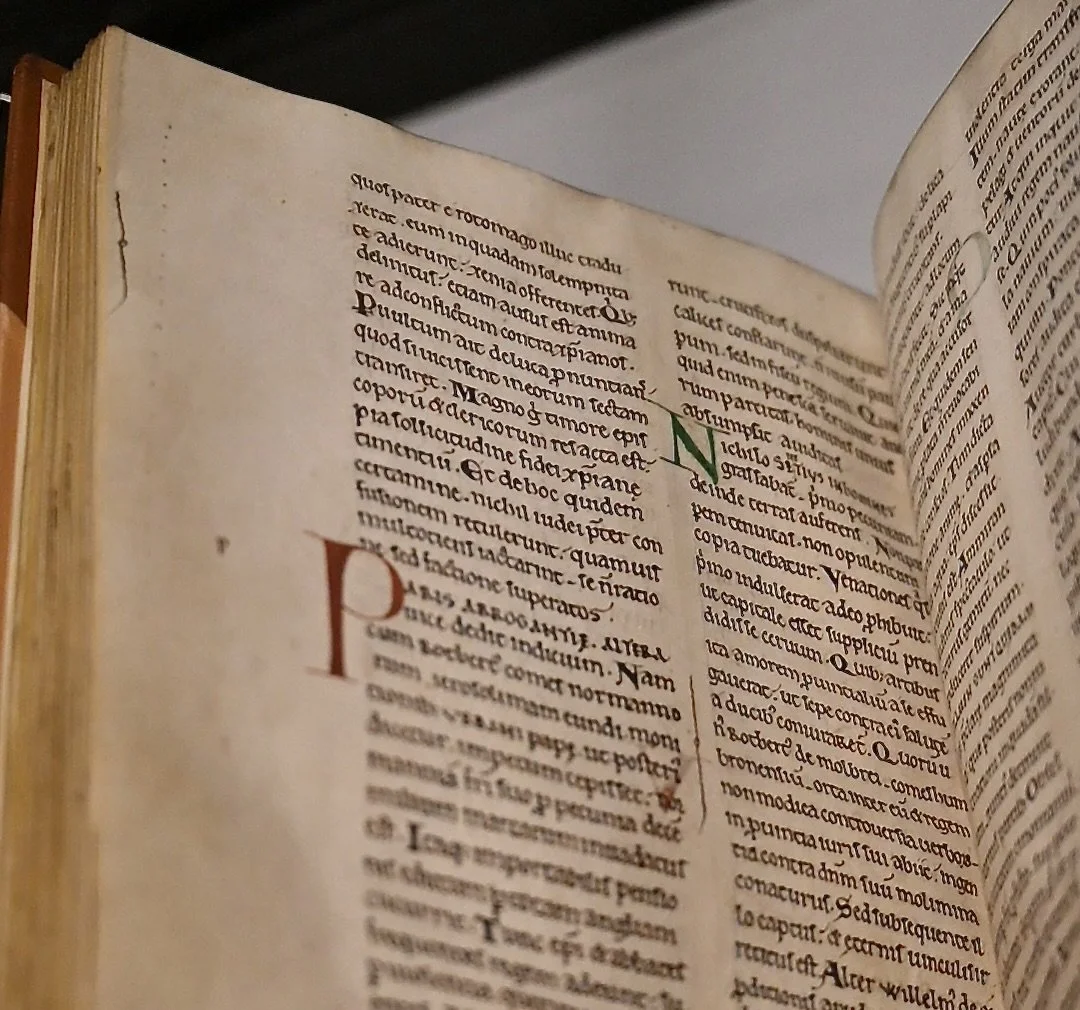
This was not a chance encounter between individuals. It represents sustained collaboration over many years between the monks of Ramsey Abbey and learned members of England’s Jewish community. It is difficult to imagine such a work being produced without relationships founded on patience, trust and mutual respect.
That makes the manuscript all the more remarkable because of when it was written.
The 1250s were becoming an increasingly difficult decade for England’s Jews. Under Henry III, they were subjected to ever heavier taxation. In 1253 the Statute of the Jewry imposed new restrictions, including the compulsory wearing of identifying badges and further limitations on everyday life. Anti-Jewish accusations continued to circulate, while popular hostility steadily increased. The “othering” of Jews was growing, a familiar step towards worse persecution.
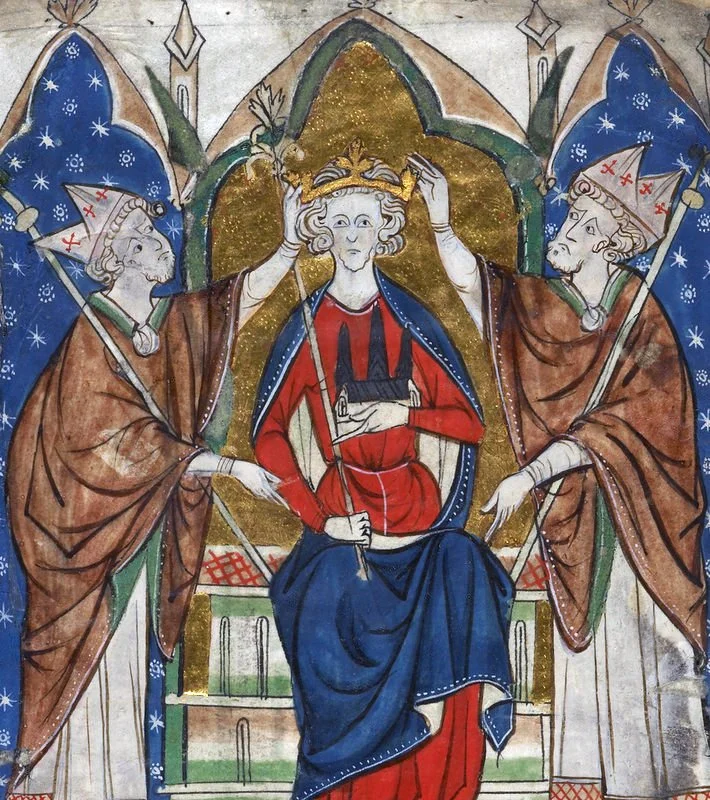
The Coronation of Henry III, Effigies ad Regem Angliae, c. 1280–1300, Cotton MS Vitellius A. XIII, folio 6r, London, British Library
Within little more than a decade, during the Barons’ War, many of London’s Jews would be murdered by followers of Simon de Montfort, their houses attacked. The community never fully recovered. Edward I inherited an already weakened Anglo-Jewish community and, after further restrictions, expelled every Jew from England in 1290.
Against that backdrop, the Ramsey manuscript becomes extraordinary. While official policy was driving Jews and Christians further apart, here were scholars doing precisely the opposite. They continued to learn from one another, preserving and transmitting knowledge that neither community could have recorded in this way alone.
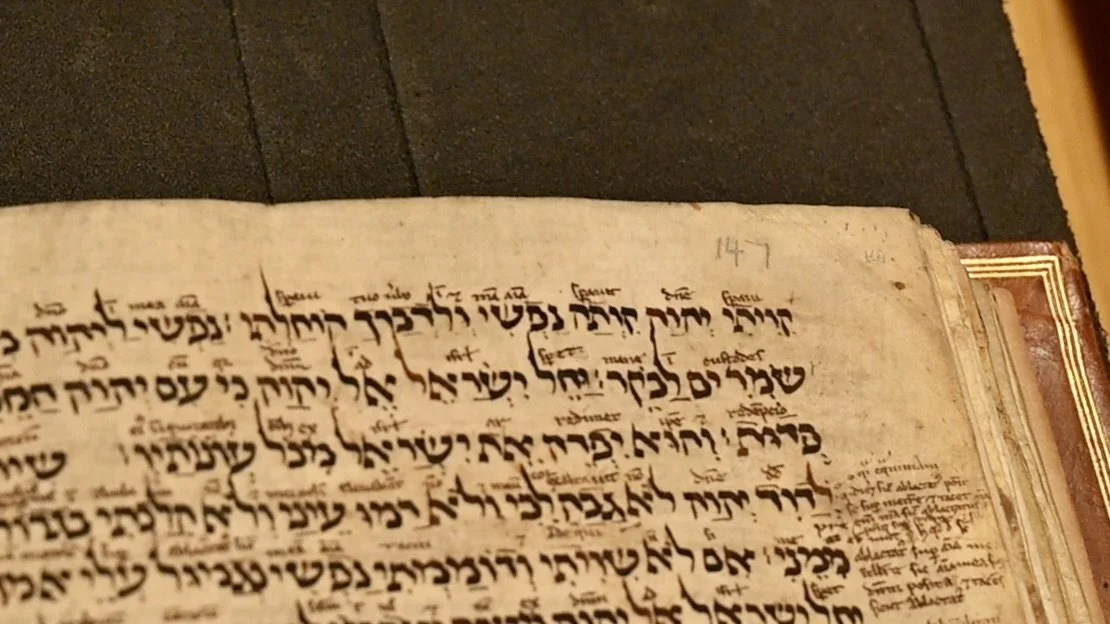
The manuscript becomes even more moving when we reach the Psalter. Originally copied by Jewish scribes, it was later studied and annotated by Christian monks. At some point two leaves were lost. Rather than abandon the book, they were replaced by a Jewish scribe, whose handwriting can still be identified today. It is a small detail, but a profound one. The monks valued the manuscript enough to seek Jewish expertise in restoring it, preserving both the book and the relationship that lay behind it.
For the Jewish Square Mile Foundation, this manuscript has a special resonance. It belongs to precisely the same England as the medieval Jewish cemetery beneath today’s Barbican. The scholars who contributed to it were contemporaries of the men, women and children buried beneath the streets of the City of London. They belonged to the same small Anglo-Jewish community—probably no more than 3,000 people across the whole of England. Some may even have known one another.
The manuscript therefore stands as both a celebration and a memorial. It celebrates a moment when scholarship crossed religious boundaries and demonstrates that curiosity could triumph over prejudice, even in difficult times. At the same time, it reminds us how much England lost. Within a generation, the conversation recorded in its pages would be silenced. The expulsion of 1290 did not merely remove a religious minority; it brought to an end a vibrant tradition of learning, exchange and shared intellectual life.
History is rarely as simple as a story of hostility or harmony. The Ramsey manuscript reminds us that, even as suspicion grew and restrictions tightened, Jewish and Christian scholars continued to meet, to learn from one another and to create something neither could have produced alone.
More than seven centuries later, that may be its greatest lesson. Dialogue between faiths is not a modern invention. It is part of England’s own history. This remarkable manuscript preserves one of the last great conversations before England’s Jews were expelled and that dialogue fell silent for more than three centuries.
It is, quite literally, a manuscript that defied division. Go online and browse the digitised manuscript and get a feel for the hours, days and years of exacting work. The British Library merits our thanks for acquiring the book, for preserving it and making this remarkable work accessible.